

A maturity signal for AfricanTech
The Africa B2B Tech Report, Africa-Middle East B2B tech news & insights for 16 June 2026.

Welcome to issue 51 of the Africa B2B Tech Report Daily. We bring you a daily digest of the news that matters to The Business of African Tech.
The Africa B2B Tech Report is published by BigFive Digital, an African tech media and events firm that produces the annual BigFive Summit in Cape Town. The report is produced and edited by Charles Laughlin, BigFive Digital’s Co-founder &Chief Content Officer. Charles is a globally experienced tech journalist, podcaster, & conference producer.
The Africa B2B Tech Report is a reader-supported publication. To support our work, please consider becoming a paid subscriber.
Thanks for reading The Africa B2B Tech Report! This post is free to the public, so feel free to share it.

Here are some recent stories that matter to The Business of African Tech.
Launch Africa creates a liquidity milestone for African VC
For years, a chief critique of Africa’s rapid tech expansion has been a persistent “returns problem”. Critics argued that while the continent excels at absorbing early-stage funding, it has struggled to convert paper gains into tangible exits.
It’s a lament we heard articulated at the 2026 BigFive Summit in Cape Town. At that event, Jill Curr, a partner in the female-focused debt investment firm MsFit Ventures, speaking about angel investors (often also VC limited partners) on the continent, described them as “tired” from putting money in and seeing little or no return.
“What’s interesting about the angels on the continent is they’re tired,” Curr said during a panel discussion at the Summit, “It’s been about 12 years, and they still haven’t seen any money. The angel network’s a little bit tapped out. So, we need to see more exits along the way.”
Again, angels and venture limited partners are two different things. But there is meaningful overlap between the two classes. The same point holds true for all investors. Sooner or later, every investor wants a big cheque to replace the (ideally) much smaller one they wrote a decade or so earlier. And if they don’t have to wait a decade, all the better.
Illiquid assets do not pay for Ferraris. Or fund new startups. Patient capital is only so patient.
Enter Launch Africa Ventures
The pan-African early–stage VC firm Launch Africa Ventures has interrupted this paper tiger narrative with an announced $2.5 million cash distribution to limited partners from one of its two funds.
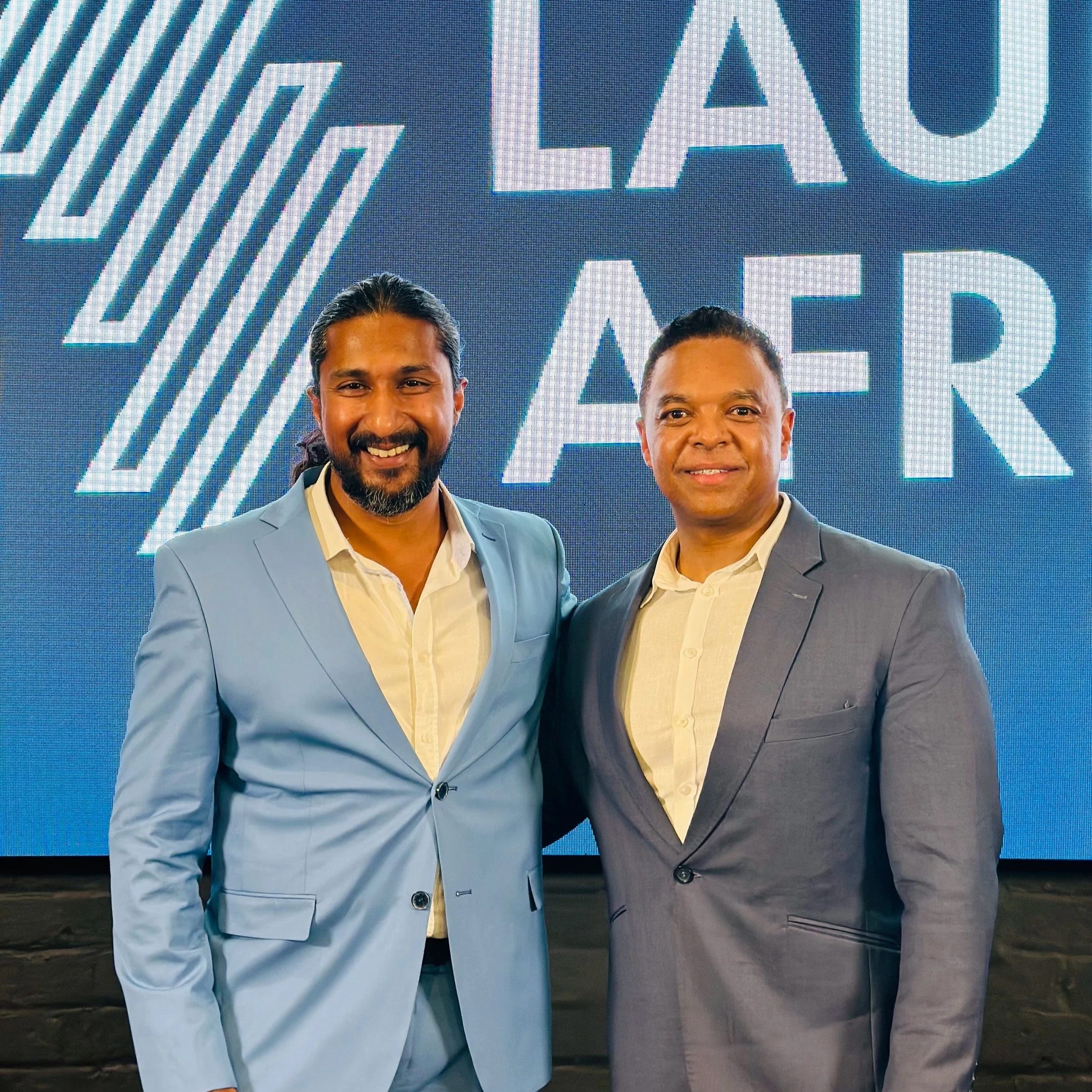
“This distribution is an important milestone – for our investors and for the African venture ecosystem more broadly,” said Zach George, Launch Africa’s managing partner, and a regular on-stage guest at the BigFive Summit and on the BIG5D Podcast.
“Venture capital is ultimately judged on realized returns, not paper gains. We are proud to show that African technology companies can generate liquidity, and that our investors can receive cash while significant upside still remains in the portfolio.”
The pan-African early-stage VC firm has distributed the cash to limited partners from its 2020-vintage Seed Fund I, achieving a pivotal Distributed to Paid-In Capital (DPI)-positive milestone.
Launch Africa is an early-stage VC firm based in Cape Town (though domiciled in Mauritius) that, across two funds, has invested in roughly 180 companies (mostly B2B) in 25 African countries. Three of its investments (Flutterwave, Andela, and Moove) are or will soon be African unicorns.
A strong maturity signal
The firm’s $2.5 million payout was driven by 11 completed portfolio exits across multiple sectors and six African countries.
Launch Africa sees this achievement signaling a structural shift in the maturity of Africa’s tech ecosystem. It proves that B2B platforms, fintechs, and logistics startups on the continent can successfully engineer liquidity through secondary sales, corporate acquisitions, and management buy-backs.
Speaking at the 2026 BigFive Summit in March, Zach emphasized specifically how intra-African M&A was a strong sign that the ecosystem was maturing.
“What’s really interesting is the percentage of M&A happening in Africa has really shot up,” Zach said during a fireside chat at the Summit.
“You don’t have to constantly rely on U.S. or European funds to create liquidity. You can create internal liquidity within the continent.”
According to Launch Africa, the 11 companies fueling the payout break down geographically and by sector as follows:
Southern Africa - 3 (South Africa)
West Africa - 3 (Nigeria, Ghana)
Francophone West Africa - 3 (Senegal)
East Africa - 1 (Tanzania)
North Africa - 1 (Egypt)
The firm reports that the 11 companies include five fintechs, including companies providing embedded lending, debt recovery, digital credit infrastructure, remittances, and credit intelligence.
Further, Launch Africa reports one exit each across payments infrastructure, agritech, logistics, B2B e-commerce, HR software, and employee wellness.
We crossed this list with Launch Africa’s publicly disclosed portfolio companies and came up with an educated guess list of the companies that may have fueled this distribution.
Again, these “exits” are not exclusively the result of straight-up M&A. In fact, George’s Launch Africa partner Janade du Plessis shared in a joint interview with TechCabal that only one of the exits was what most would consider a “proper M&A.”
Most of the liquidity came from a combination of secondary sales, corporate acquisitions, and management buy-backs. In the TechCabal interview, du Plessis shared how the exits broke down heavily in favor of secondaries.
“From a partial versus full perspective, out of the 11, five were full exits, and six were partial exits,” du Plessis said. “Across all 11, the split between secondaries and non-secondaries was about eight secondaries and three trade sales or management buyouts.”
Who’s on the list?
While Launch Africa has kept the company list private, it has acknowledged that Peach Payments, a South African payments gateway that operates in several African markets, was among the companies supplying the liquidity needed to distribute the returns.
In the interview with TechCabal, George acknowledged that Launch Africa sold its Peach shares to another VC that wanted to join the fintech’s cap table.
“We sold our entire stake and made close to a 5x return, cash on cash. It was a full exit through a secondary to fellow VCs in the ecosystem, which I think is a beautiful story,” Zach told TechCabal. “That is how you build infrastructure. That is how you build the rails in a maturing ecosystem.”
What are some other candidates for this list? Again, most of these “exits” are of the kind that escape real-time media attention.
In HR software, Launch Africa is an investor in Jem. This seems to be the most likely candidate in this sector.
Launch Africa also noted that one logistics exit came out of Francophone West Africa. Logidoo, a cross-border logistics and warehousing platform operating actively across Senegal and Morocco, fits the geographic and sectoral profile and is a likely candidate for the list.
Looking at agritech (one exit). Complete Farmer is a Ghanaian agritech marketplace within the portfolio. So it fits the profile for an Anglophone West African exit.
Another is OmniBiz, which acquired Traction Apps last October. These acquisitions often trigger secondaries and other events that could place OmniBiz on the list.
In East Africa, the fintech Credable, a banking-as-a-service and digital corporate fintech infrastructure platform based in Tanzania, stands out as a candidate for the list.
In the TechCabal interview, du Plessis acknowledged that one exit came from North Africa and was a “majority takeover” in Egypt. Two candidates for this spot on the list are Kashat (fintech) and Docspert Health (healthtech).
Looking back at fintechs in Francophone West Africa, the Ivorian fintechs Julaya or Djamo might also be on the list.

ICYMI: The BIG5D Podcast
Our most recent episodes of the BIG5D Podcast have brought you into the room at the 2026 BigFive Summit at Innovation City Cape Town, where the conversations about The Business of African Tech were smart, candid, and insightful.
Here is a rundown, in case you missed any of these great conversations. We have more great episodes coming soon.
E60: Women in Tech Leadership featuring Jill Curr & Laura Thomas

Episode 60 is a must-listen for female founders, of course, but also for anyone who wonders why such a small percentage of African venture funding goes to female founders. This episode is also for anyone who wants to understand how different entrepreneurship feels for women than it does for men.
The episode was recorded at the Summit as a panel discussion on Women in Tech Leadership. It features Jill Curr, one of the founders of MsFit Ventures, a debt fund backing “real economy” female entrepreneurs, and Laura Thomas, founder of edtech startup The Aligned Woman.
Yet some truths about running businesses are truly universal. As Laura says during the episode, the best test of whether you are a natural entrepreneur is “how insane you are”.