

Another sign that all roads lead to stablecoins
The Africa B2B Tech Report, Africa-Middle East B2B tech news & insights for 20 July 2026.

Welcome to issue 75 of the Africa B2B Tech Report Daily. We bring you a daily digest of the news that matters to The Business of African Tech.
The Africa B2B Tech Report is published by BigFive Digital, an African tech media and events firm that produces the annual BigFive Summit in Cape Town. The report is produced and edited by Charles Laughlin, BigFive Digital’s Co-founder & Chief Content Officer. Charles is a globally experienced tech journalist, podcaster, & conference producer.
The Africa B2B Tech Report is a reader-supported publication. To support our work, please consider becoming a paid subscriber.
Thanks for reading The Africa B2B Tech Report! This post is free to the public, so feel free to share it.
Nigeria’s Timon tops 100K users, lands expansion funding
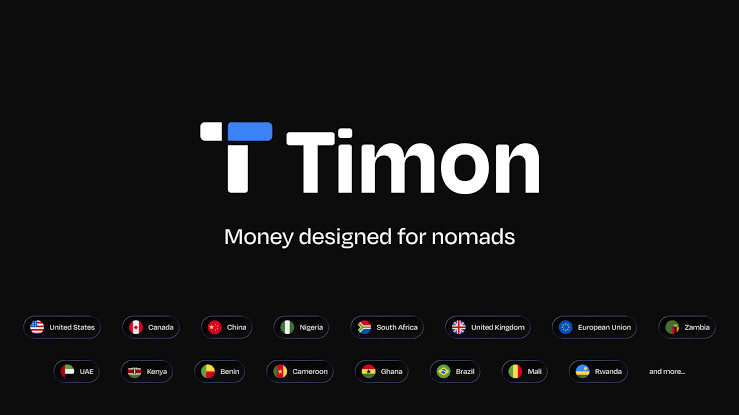
The Nigerian travel fintech Timon has secured fresh funding from the global crypto accelerator Alliance (a.k.a., Alliance DAO) to power its expansion into Kenya, after the company reached the milestone of 100,000 users.
Timon secured this fresh backing after being selected into Alliance's crypto cohort, but both parties are keeping the financial terms of the deal private.
Timon was launched in September 2024 by Chizaram Ucheaga and Oluwatomi Ayorinde to solve card failures and foreign exchange restrictions for cross-border travelers.
Timon allows users to fund wallets using local currencies, USD, and stablecoins.
Interestingly, stablecoins drive nearly 70% of Timon’s wallet volumes, which highlights what may be a key strategic shift.
We recently wrote about the Nigerian “gigtech” Gigbanc hitting rough sailing over funding and compliance headaches involving traditional payment rails. Meanwhile, Timon’s reliance on web3 architecture points to a resilient path forward for African B2B and cross-border payment platforms.
As Oasis says, “all the roads we have to walk are winding. And all the lights that lead us there are blinding.”
In African fintech this year, all roads keep leading back to stablecoins. And the lights keep getting brighter.
Here is our quick daily roundup of the African tech and business stories we think you should be aware of, but probably didn’t have the time to read. [Original sources included.]
Launch Africa defies VC slowdown with 15 new investments
Pan-African VC firm Launch Africa Ventures has closed 15 new early-stage investments from Fund II in 2026, targeting AI, B2B commerce, and embedded finance across the continent. This deployment follows a distribution of $2.5 million back to Fund I investors via 11 successful exits.
Empower Africa
Wema Bank launches SME Business School applications
Wema Bank has opened applications for its 2026 SME Business School, offering free, comprehensive business management training to Nigerian entrepreneurs. The curriculum bridges critical knowledge gaps in finance and market access, pairing local merchants with top global business experts to build resilient, corporate frameworks.
MSME Africa
SA innovator reimagines networking beyond social media
South African entrepreneur Dillon Naicker is redefining professional networking through his digital business card platform, Keychain. Moving beyond traditional social media, the touch-based contactless tech offers local B2B professionals and enterprise teams an innovative way to instantly share contact profiles, track engagement analytics, and build authentic connections.
Forbes Africa
Vercel acquires Egypt’s Stakpak to scale AI infrastructure
American cloud platform Vercel has acquired Egyptian-founded startup Stakpak, adding its autonomous DevOps capabilities to Vercel’s expanding “AI Cloud” stack. Founded by George Fahmy, Stakpak utilizes open-source AI agents to automate complex cloud infrastructure management, representing a major exit for Egypt’s deep-tech ecosystem.
ArabFounders
Interswitch swings to ₦23B profit, but remains Nigeria-dependent
Nigerian fintech pioneer Interswitch achieved a massive financial turnaround, posting a ₦23 billion pre-tax profit for its latest financial year after bouncing back from a ₦1.6 billion loss. However, over 90% of its ₦137.5 billion revenue still comes from Nigeria, underscoring the severe friction of pan-African expansion.
Roads make distant places accessible while making nearby places strangely unreachable without a car.