

Flutterwave's financial operating system & more
The Africa B2B Tech Report, Africa-Middle East B2B tech news & insights for 10 June 2026.

Welcome to issue 47 of the Africa B2B Tech Report Daily. We bring you a daily digest of the news that matters to The Business of African Tech.
The Africa B2B Tech Report is published by BigFive Digital, an African tech media and events firm that produces the annual BigFive Summit in Cape Town. The report is produced and edited by Charles Laughlin, BigFive Digital’s Co-founder &Chief Content Officer. Charles is a globally experienced tech journalist, podcaster, & conference producer.
The Africa B2B Tech Report is a reader-supported publication. To support our work, please consider becoming a paid subscriber.
Thanks for reading The Africa B2B Tech Report! This post is free to the public, so feel free to share it.

Here are some recent stories that matter to The Business of African Tech.
Flutterwave CEO wants build Africa’s financial operating system powered by stablecoins
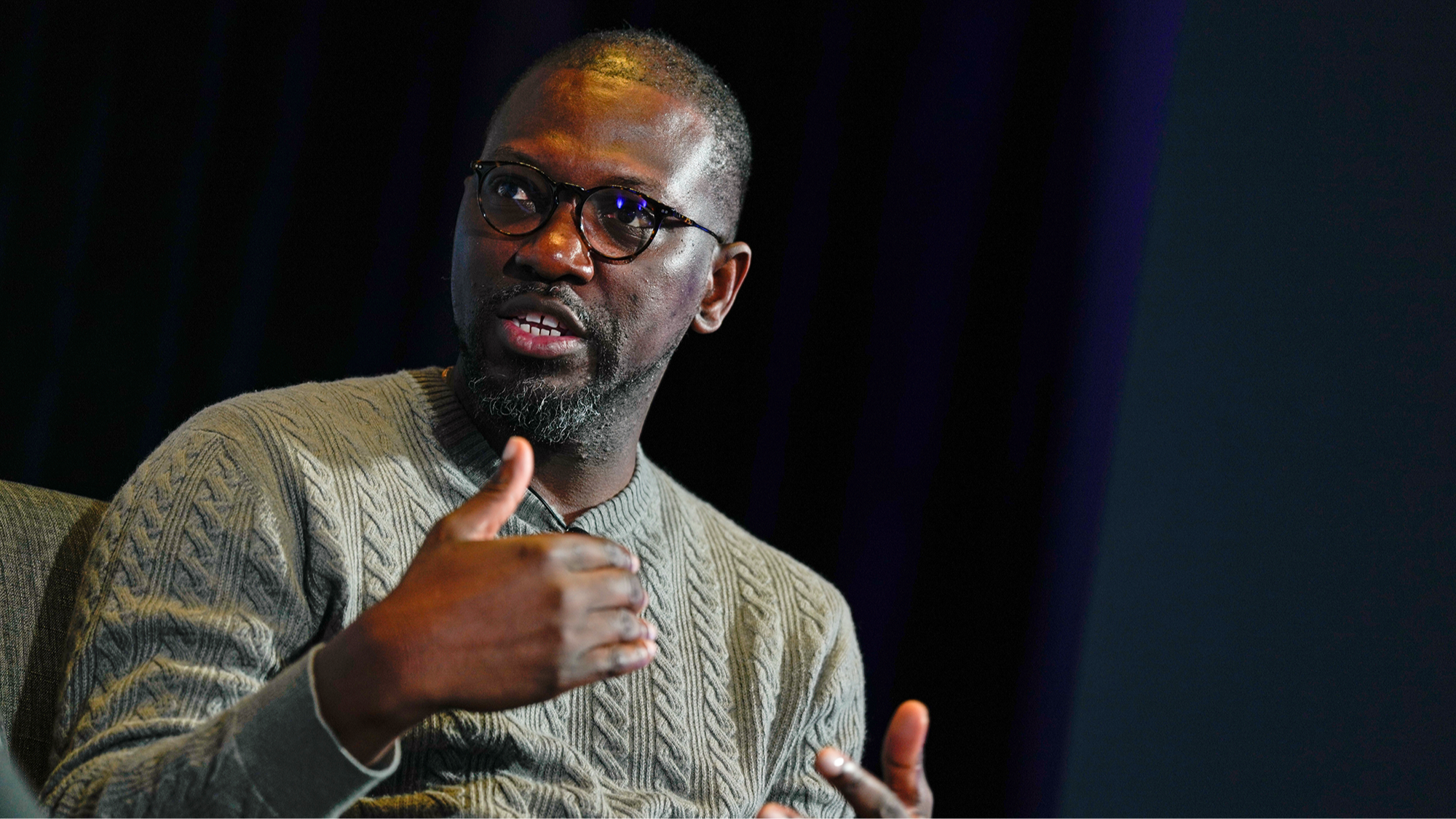
The commoditization of payment processing is forcing Africa’s fintech giants to rewrite their playbooks. Speaking in Amsterdam at a Money 20/20 Europe fireside chat, Flutterwave CEO Olugbenga Agboola signaled a fundamental pivot for the continent’s most valuable startup: a decisive push into multi-rail, stablecoin-driven infrastructure designed to act as Africa’s financial operating system.
As we have detailed in our previous coverage of Africa’s evolving stablecoin landscape, digital assets are rapidly becoming a critical B2B liquidity mechanism. At Money 20/20, Agboola described stablecoins as a high-speed settlement layer sitting on top of existing banking infrastructure rather than replacing it.
By allowing money to move “at the speed of the internet” rather than waiting on traditional banking hours, stablecoins offer a vital pressure valve for cross-border merchants grappling with liquidity bottlenecks and volatile foreign exchange markets.
As we have often noted here, stablecoins can also remove much of the cost and delay from cross-border remittances, which are the lifeblood of many African nations.
The key takeaway from Agboola’s Money 20/20 appearance is that Flutterwave’s next decade will be about deep enterprise rails, not just transaction routing. The company is actively building a multi-rail ecosystem where traditional fiat and stablecoin networks operate side-by-side. To power this, they have locked in key strategic partnerships with players like Circle, Polygon, and Fireblocks to build a massive, regulated stablecoin infrastructure network.
At the conference, Agboola said he doesn’t believe the real challenge is in wallet-to-wallet transfers, but rather in the compliance, anti-money laundering frameworks, and in the last-mile settlement into local fiat.
Complemented by its recent microfinance banking license in Nigeria, Flutterwave is positioning itself to own the entire regulatory and treasury tech stack—proving that in the next era of African B2B tech, infrastructure players will beat pure-play processors every time.

The Billionaire Space Race Lands in East Africa
The low-Earth orbit (LEO) satellite battleground has officially reached African soil. Jeff Bezos’s Amazon is making its most aggressive move yet to counter Elon Musk’s early dominant lead on the continent, turning Kenya into ground zero for the next era of B2B digital infrastructure.
According to Business Insider Africa, Amazon’s local unit, Amazon Kuiper Kenya Limited, has applied to the Communications Authority of Kenya for an International Gateway Operator license. If accepted, this would allow Amazon to construct its first African satellite earth station. These physical gateways bridge the gap between orbital LEO networks and terrestrial fiber infrastructure, dramatically slashing data latency for enterprise functions.
Musk’s Starlink, which entered Kenya in 2023, has reached 22,000 local subscribers via aggressive pricing and hardware financing. However, Amazon is positioning its LEO network—offering speeds up to 400 Mbps—not just for direct consumer retail, but as a foundational wholesale layer.
Amazon’s B2B strategy targets last-mile telco infrastructure. Leveraging a global agreement with Vodafone, Amazon intends to backhaul remote 4G and 5G mobile towers through its satellite network.
In East Africa, this rollout will move through Safaricom’s parent company, Vodacom. While Starlink has pursued similar wholesale partnerships with operators like Airtel Africa, Amazon’s deep integrations with regional telco monopolies could be the difference maker in the race between these two massive egos (and wallets).
Notably, Starlink has stayed out of the vanity space tourism race to focus on B2B opportunities in space. To our knowledge Musk (unlike Bezos) has not shot any of his current or former romantic partners into the outer reaches of Earth’s atmosphere. Whether Musk’s deeper focus on commercializing space or Bezos’s deeper African telecom integrations wins the day remains to be seen.
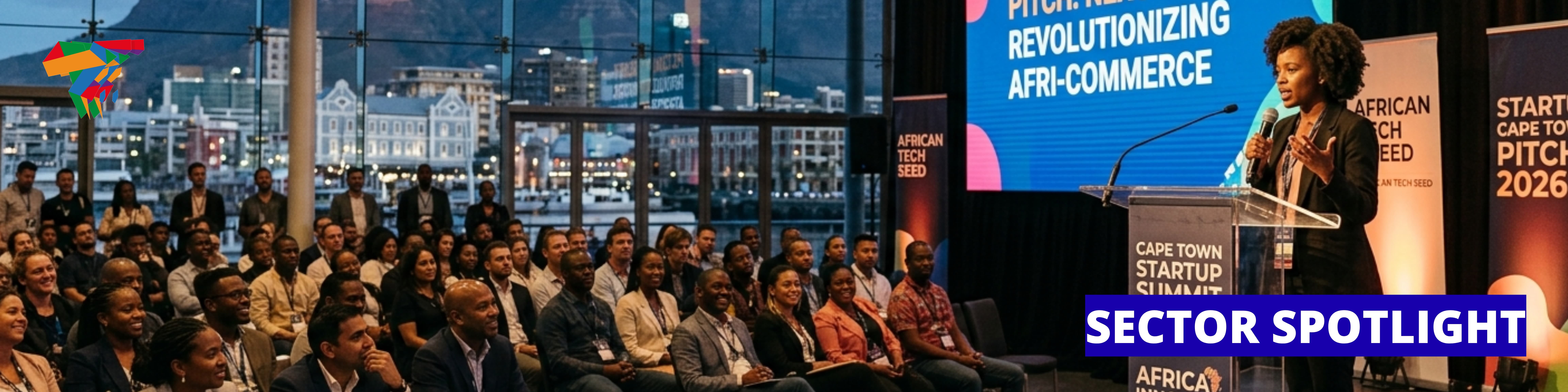
We regularly share infographics telling important stories about The Business of African Tech.
African startups raise $135M in $100K+ deals in May
We found today’s Sector Spotlight on LinkedIn, courtesy of Max Cuvellier Giacomelli from Africa: The Big Deal.
What was important about the May figures, according to Giacomelli?
Purely from a total funding perspective, May was, well, meh. Bigger than April ($110M) but smaller than March ($150M).
What really stood out in May was that there was roughly an even balance between equity ($65m) and debt ($68), with $2 million in grants completing the picture. And this is not a May anomaly. Giacomelli writes in his post:
It’s broadly what the market looks like now, a marked shift from 12–18 months ago, when the ecosystem was much more equity-led, with an equity share over 70%.”

There are a few factors at play behind this shift from equity to debt. One is that if a company’s valuation is below where they were at the last raise, using debt avoids the dreaded “down round” that locks in a reduced valuation.
Another factor could be that as AI has been sucking up so much international VC money, founders have had to look to alternative sources, including debt funds.
Also some sectors lend themselves more to debt. For example, a fintech financing solar panels needs a lot of capital and has the collateral and recurring revenue that are attractive to lenders.
ICYMI: The BIG5D Podcast
Our most recent episodes of the BIG5D Podcast have brought you into the room at the 2026 BigFive Summit at Innovation City Cape Town, where the conversations about The Business of African Tech were smart, candid, and insightful.
Here is a rundown, in case you missed any of these great conversations. We have more great episodes coming soon.
E60: Women in Tech Leadership featuring Jill Curr & Laura Thomas

Episode 60 is a must-listen for female founders, of course, but also for anyone who wonders why such a small percentage of African venture funding goes to female founders. This episode is also for anyone who wants to understand how different entrepreneurship feels for women than it does for men.
The episode was recorded at the Summit as a panel discussion on Women in Tech Leadership. It features Jill Curr, one of the founders of MsFit Ventures, a debt fund backing “real economy” female entrepreneurs, and Laura Thomas, founder of edtech startup The Aligned Woman.
Yet some truths about running businesses are truly universal. As Laura says during the episode, the best test of whether you are a natural entrepreneur is “how insane you are”.