

Mooving beyond Africa's unicorn obsession
Your daily intelligence briefing on The Business of African Tech for 12 August 2026


The Africa B2B Tech Report is a reader-supported publication. To support our work, please consider becoming a paid subscriber.
Thanks for reading The Africa B2B Tech Report! This post is free to the public, so feel free to share it.

Africa has a new unicorn – why should we care?
The concept of the African tech startup unicorn has always been a little bit odd.
It’s an ever-present notion in African tech, which has a low-key obsession with the number of unicorns (private companies valued at $1 billion or more) it has minted.
The oddity of it all struck us again today when we saw Africa: The Big Deal’s latest list of African tech unicorns. There is a new member, the Nigerian mobility fintech Moove, following its recent $250 million funding round, which we covered last week.
Notably we were more interested in Moove’s pivot to offering infrastructure to the global autonomous vehicle (AV) industry than the size of its funding round, which was meaningful and impressive.
In the unicorn concept’s defense, it is helpful to have some way to measure the continent’s progress in building a robust tech ecosystem. Is keeping a running tally of private companies that have achieved a $1 billion valuation the best way? Probably not. But no measure is perfect. The other metric that generates the most attention, the startup fundraising tally, isn’t perfect either.
If you are trying to take a snapshot of an ecosystem and track its progress over time, these metrics are far better than none at all.
But the unicorn tally tends to emphasize size over all other virtues. Should every $10 million company aspire to unicorn status? Probably not, but it’s hard to become a billionaire without that ambition. Also, the two metrics — fundraising and achieving unicorn status — are intertwined. Investors do not care to fund companies with small ambitions.
The toxicity of celebrating venture funding events is a well-worn topic. VC Zach George of Launch Africa Ventures said it best last year at the BigFive Summit when he blamed Silicon Valley for “glamorizing” raising venture funding, something he says emphatically that most startups in Africa should avoid if they possibly can.
Africa’s obsession with gaining unicorn status has always felt artificial. It can even give off vibes of a youngster trying a little too hard to keep up with their older sibling. These days, startups in Europe and North America do little if anything to herald this milestone.
The unicorn concept emerged in 2013 when Silicon Valley venture capitalist Aileen Lee coined the phrase to describe an elite class of startups. Lee’s original list included 39 companies (all of them household names now).
Today, the list stands at more than 1,200 worldwide. And of course we have the inevitable spinoff monikers – decacorn, hectocorn, and in Africa, the simultaneously clever and cringy “soonicorn” – denoting a company considered to be one raise away from a $1 billion valuation.
Still, in Africa’s defense, the fact that the continent’s unicorn list stands at just 11 helps to make the case that there is still value in tracking this measure. Perhaps we should hold off the chorus of yawns until the list reaches at least 100.
South Africa sunsetting of PASA ushers in new era
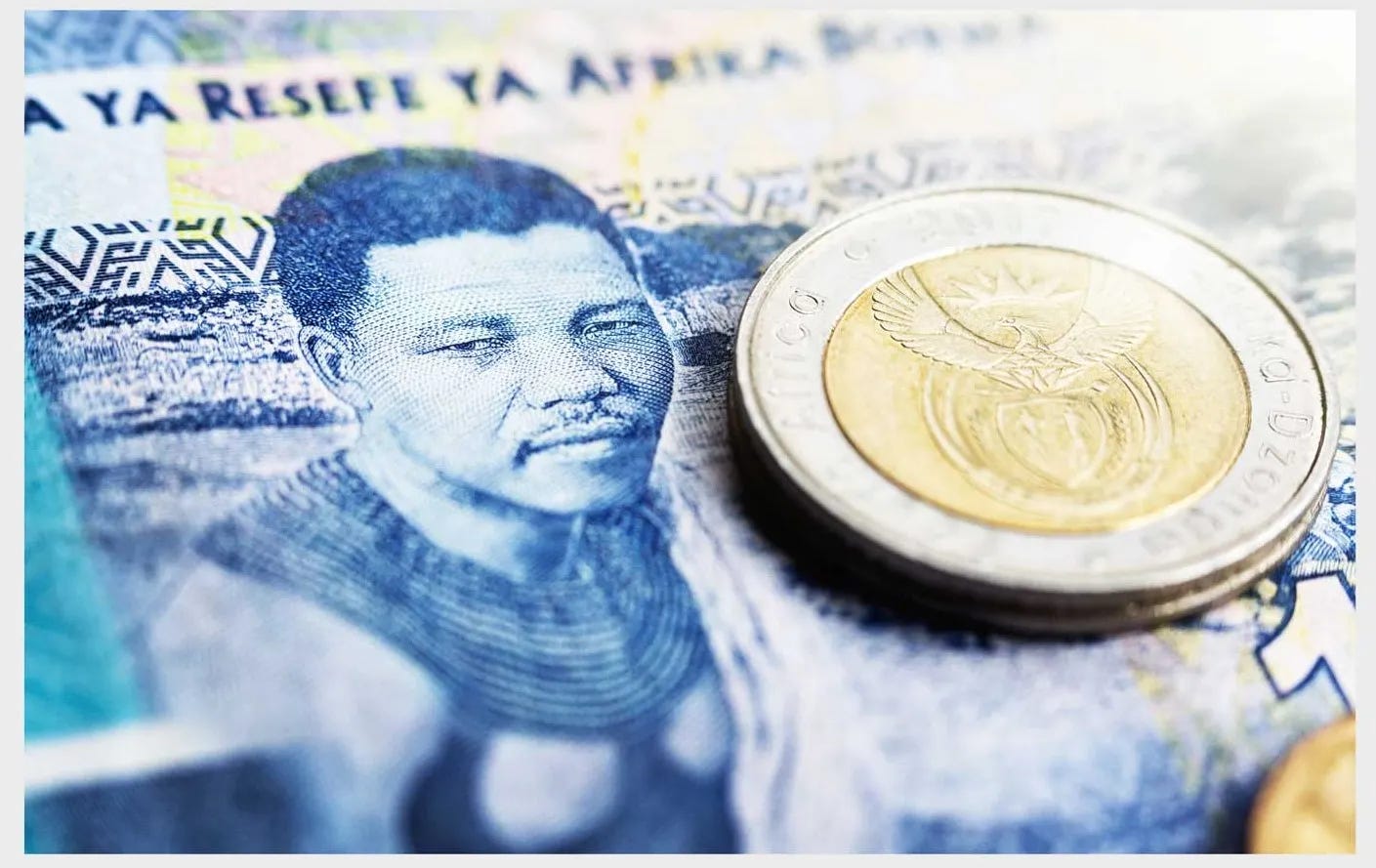
The South African Reserve Bank (SARB) has announced the withdrawal of its recognition of the Payments Association of South Africa (PASA) as a payment system management body, dismantling a 30-year bank-led self-regulatory regime.
According to the SARB, this step is part of ongoing structural reforms to modernize South Africa’s National Payment System, ensuring it remains safe, efficient, innovative, and responsive to all user needs.
The decision stems from the central bank’s goal to eliminate legacy gatekeeping, transitioning oversight from an entity-based model to direct regulatory supervision and activity-based licensing.
Under this revamp, regulatory and standards governance transfers directly to the SARB, while operational clearing functions shift to PayInc.
Who Wins:
Non-Bank Fintechs & PSPs: Direct oversight by the SARB eliminates historical dependence on commercial bank sponsorship, allowing non-banks to directly obtain licenses, process transactions, and access national clearing rails like PayShap.
Merchants & Consumers: Heightened market competition and direct fintech participation are expected to drive down transaction processing fees, accelerate real-time payment adoption, and expand financial inclusion.
Who Loses:
Legacy Commercial Banks: Traditional banks lose the exclusive self-regulatory dominance and middle-mile control they exercised through PASA since 1996.
PASA: As an independent self-regulatory entity, PASA will sunset as its staff, intellectual property, and duties are absorbed by the SARB and PayInc through September 2026.
Here is our quick daily roundup of the African tech and business stories we think you should be aware of, but probably didn’t have the time to read. [Original sources included.]

Today’s TLDR is supported by SALT
Connecting business with digital talent in South Africa
TikTok, MTN partner to reduce the cost of doom scrolling
MTN South Africa has partnered with TikTok to launch affordable, dedicated data bundles for prepaid and contract customers. Designed to reduce heavy data costs associated with short-form video streaming, the new daily, weekly, and monthly packages offer heavily discounted rates specifically optimized for consuming content on TikTok.
MyBroadband
More infrastructure news – Zambia lands $265M from ADB
Zambia has secured $265 million in financing from the African Development Bank Group to construct 550 kilometers of railway line and upgrade regional transport links along the Lobito Economic Corridor. This commitment joins other recent sovereign infrastructure initiatives across the continent—including Chad’s €110 million Afreximbank transport facility, Morocco’s $2.7 billion grid expansion, and Angola’s regional power transmission projects.
FundsforNGOs
What is behind Nigeria’s high SME failure rate?
Many Nigerian small businesses fail within five years due to poor planning, inadequate financial management, weak documentation, and improper market analysis, according to University of Ibadan Business School scholar Dr. Siyanbola Omitoyin. Rather than capital shortages alone, unsustainable execution and inappropriate staffing cripple early-stage growth.
The Guardian Nigeria
The Africa B2B Tech Report is published by BigFive Digital, a Cape Town-based independent media company focused on The Business of African Tech.
The report is produced by Charles Laughlin, BigFive Digital’s Co-founder & Chief Content Officer. Charles is a globally experienced tech journalist, podcaster & conference producer.