

Roads & power lines, Africa’s essential investment
Welcome to to issue 91 of the Africa B2B Tech Report Daily -- your daily intelligence briefing on African B2B tech trends and insights

The Africa B2B Tech Report is a reader-supported publication. To support our work, please consider becoming a paid subscriber.
Thanks for reading The Africa B2B Tech Report! This post is free to the public, so feel free to share it.
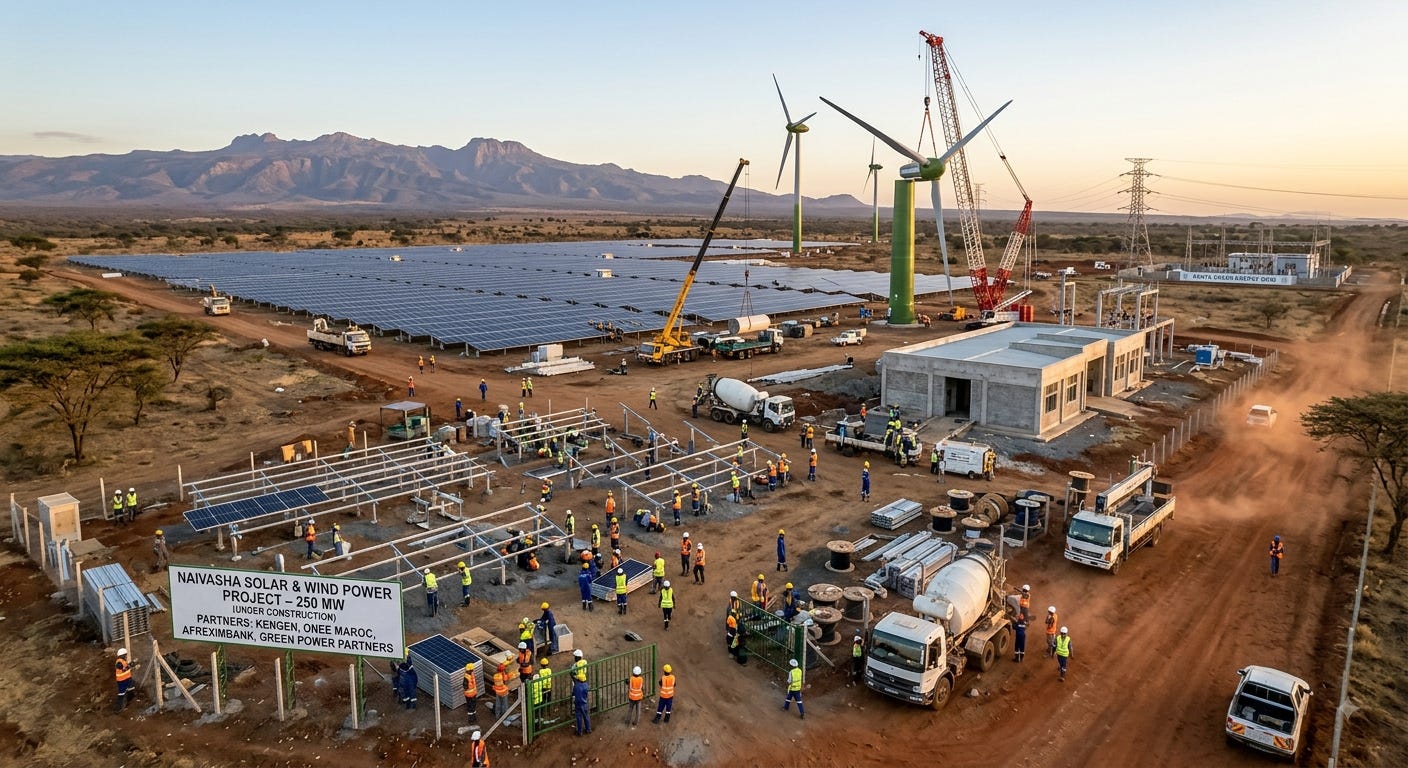
Why Africa’s infrastructure boom is a ‘secret’ tech catalyst
Across the continent, a wave of large infrastructure investments from governments and multinational banks is reshaping national economies.
These investments are most often framed around traditional development goals that are very real and urgent. Yet these investments in transport, energy, and logistics are quietly laying the foundation for Africa’s digital future.
The latest example comes from Chad, which recently secured a record €110 million facility from Afreximbank to finance critical urban and transport infrastructure.
This follows Morocco’s massive $2.7 billion program via ONEE to upgrade its national energy and water grid, expanding transmission capacity and power flexibility to support the country’s ambitious Digital Morocco 2030 strategy (and of course to prepare for the 2030 World Cup).
Similar moves are taking place across the continent, from Nigeria’s ongoing multi-billion-dollar transport corridor investments to Angola’s sovereign-backed regional energy transmission projects.
Regardless of their primary mandate—whether paving roads in N’Djamena or stringing power lines across North Africa—these projects address the fundamental constraints that have historically stifled African tech growth.
Tech is famously and at times controversially an energy and infrastructure hog. Everything from SaaS platforms to cloud infrastructure, to AI compute clusters and cross-border digital trade requires reliable power grids and integrated transport corridors.
High-capacity data centers require uninterrupted energy supplies, while e-commerce and logistics platforms rely on paved physical networks to complete last-mile delivery.
China is playing an anchor role in this movement. State-backed entities like the Silk Road Fund have channeled billions into African grid extensions, renewable energy generation, and logistics hubs. These energy investments directly address the power deficits that restrict data center scale.
And China has a direct hand in the continent’s growing smartphone penetration, a key measure of Africa’s digital progress.
Chinese tech firms like Huawei build 70% to 80% of Africa’s 4G/5G networks and terrestrial fiber, while brands like Transsion supply affordable smartphones.
Of course, Africa needs renewable energy and clean water to sustain its population. But if building a robust digital economy is key to the continent’s future prosperity, then these infrastructure investments are key to making this future possible.
By stabilizing power and linking urban centers, these traditional infrastructure projects provide African nations with the baseline stability that’s needed to host hyperscale data centers, attract enterprise tech investment, and meaningfully participate in the global digital economy.
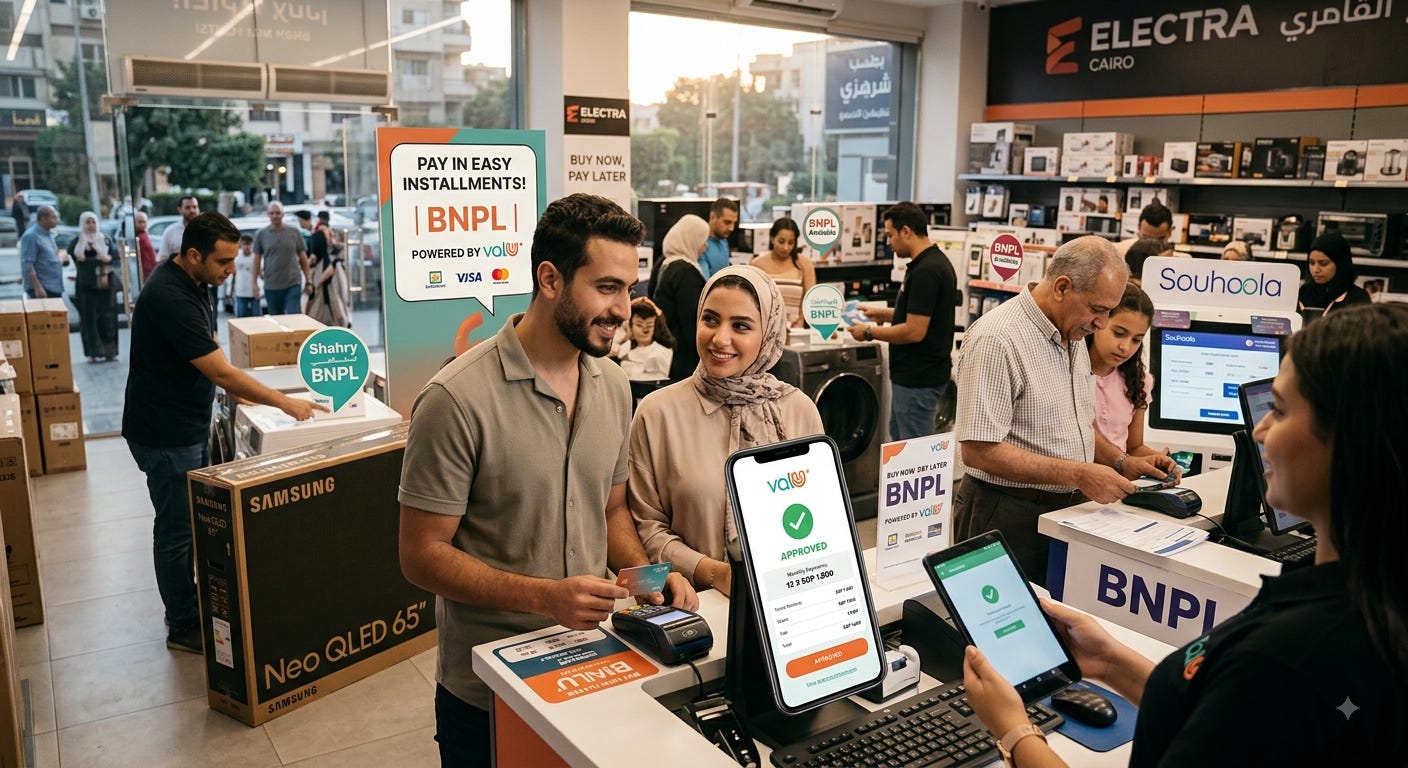
Tightening credit vise compels Egypt’s BNPL platforms to pivot
The Central Bank of Egypt and the Financial Regulatory Authority are imposing stricter consumer lending caps and higher capital risk weights as measures to curb inflation. This shift is pushing the country’s buy-now-pay-later (BNPL) sector into a structural pivot toward fee-based services.
Facing elevated borrowing costs and bank credit restrictions, the BNPL platform valU, for example, is steering its strategy away from pure balance-sheet lending toward fee-based merchant payment processing, according to a report from LaunchBaseAfrica.
This regulatory squeeze impacts a highly competitive fintech landscape. Platforms like Sympl, Shahry, Souhoola, and Blnk—which have historically driven growth by offering easy consumer credit at point-of-sale—now confront shrinking lending margins and tighter liquidity.
In response, providers are diversifying beyond consumer finance into high-margin transaction services, B2B payment gateway infrastructure, and merchant software.
By shifting focus from balance-sheet exposure to transaction velocity, Egypt’s BNPL operators aim to shield profitability while navigating the central bank’s tightening monetary policy.
Here is our quick daily roundup of the African tech and business stories we think you should be aware of, but probably didn’t have the time to read. [Original sources included.]

Today’s TLDR is supported by SALT
Connecting business with digital talent in South Africa
Why is Nigeria turning crypto traders into tax collectors?
Nigeria has introduced new virtual asset regulations establishing a coordinated oversight framework led by the Central Bank of Nigeria, SEC, and tax authorities. Designed to eliminate regulatory ambiguity, the rules require virtual asset service providers (VASPs) to meet stricter capital requirements, robust AML controls, and structured licensing.
TechCabal
MENA startups raise $172.6M in July
Startups across the Middle East and North Africa raised $172.6 million across 45 deals in July 2026, a 16% month-on-month increase. Driven largely by debt financing (56%) and heavy e-commerce investment (55%), Saudi Arabia led regional funding by capturing $106.6 million across 16 transactions.
Arab Founders
TikTok age verification coming to South Africa
South Africa’s Department of Communications plans to require major video platforms like YouTube and TikTok to enforce age-verification systems. Inspired by regulatory frameworks in the UK and Australia, the proposed rules aim to shield minors from harmful online content and introduce a new online safety ombudsman.
MyBroadband
Oakvale chooses Tennsa as its first AI fund investment
South African startup Tennsa has secured R1 million (approx. $61,000) as the inaugural portfolio investment for Oakvale Invest, Africa’s first AI-focused pre-seed fund. Tennsa will use the capital to scale its AI business intelligence OS platform for African SMEs.
TechBuild Africa
Ecosystem barriers also hold back female founders
For South African women entrepreneurs, securing capital addresses only part of the growth puzzle. True scaling requires addressing broader ecosystem barriers—including unequal access to corporate supply chains, networks, market opportunities, and tailored business support—demanding holistic structural reform beyond equity financing alone.
Moneyweb
The Africa B2B Tech Report is published by BigFive Digital, a Cape Town-based independent media company focused on The Business of African Tech.
The report is produced by Charles Laughlin, BigFive Digital’s Co-founder & Chief Content Officer. Charles is a globally experienced tech journalist, podcaster & conference producer.