

Rwanda's regulatory disruption
The Africa B2B Tech Report, Africa-Middle East B2B tech news & insights for 3 July 2026.


Welcome to issue 64 of the Africa B2B Tech Report Daily. We bring you a daily digest of the news that matters to The Business of African Tech.
The Africa B2B Tech Report is published by BigFive Digital, an African tech media and events firm that produces the annual BigFive Summit in Cape Town. The report is produced and edited by Charles Laughlin, BigFive Digital’s Co-founder &Chief Content Officer. Charles is a globally experienced tech journalist, podcaster, & conference producer.
The Africa B2B Tech Report is a reader-supported publication. To support our work, please consider becoming a paid subscriber.
Thanks for reading The Africa B2B Tech Report! This post is free to the public, so feel free to share it.

Here are some stories that matter to The Business of African Tech.
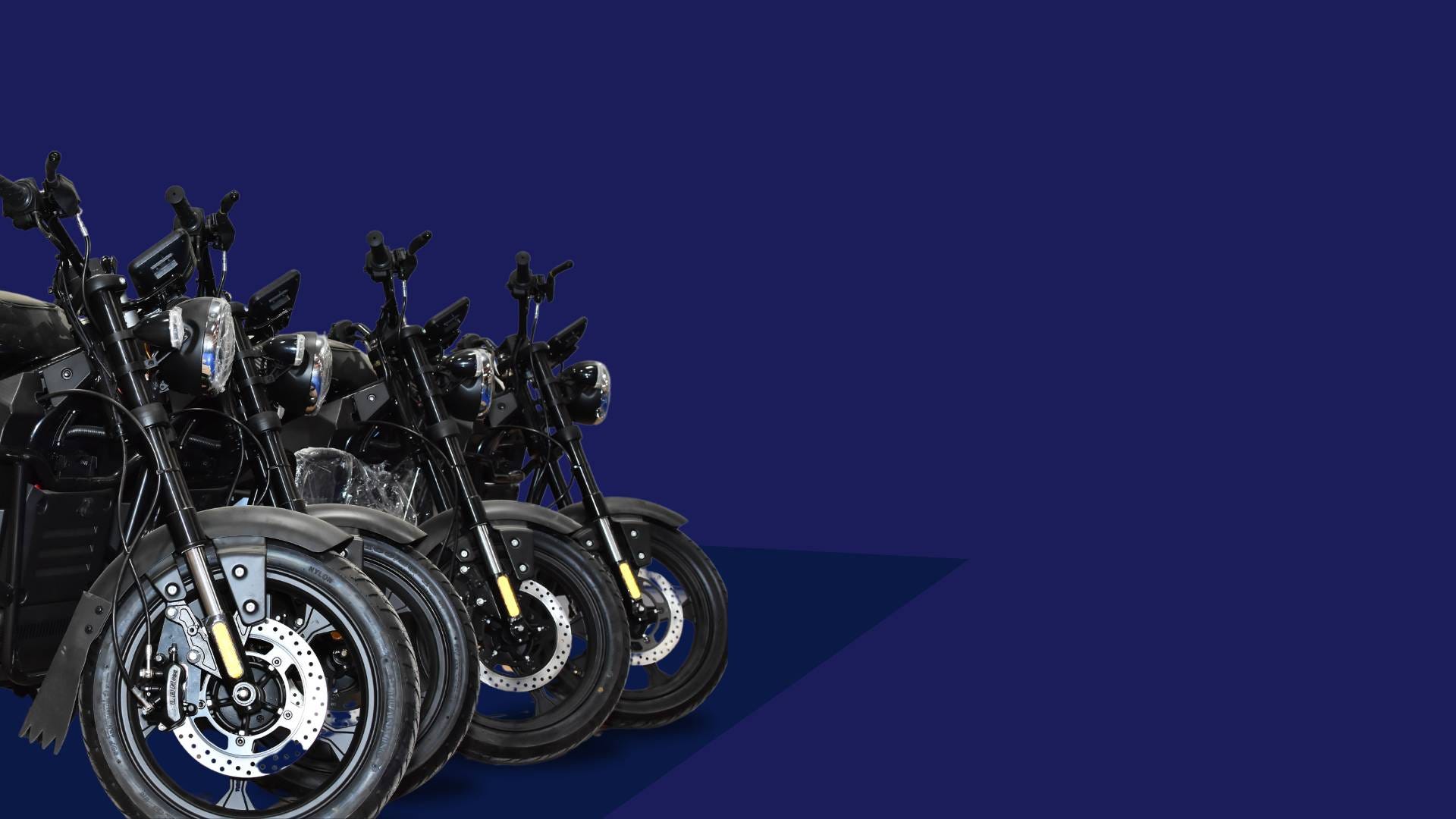
Rwanda aims at EV monopolies with interoperability mandate
In June, Rwanda made a regulatory move to mandate universal battery-swapping interoperability. The rule, issued by the Rwanda Utilities Regulatory Authority (RURA), requires that within two years, all new electric motorcycles in Rwanda must be “technically compatible and interoperable” with approved battery-swapping systems already on the market.
Given how competitive the e-mobility landscape has become in Africa, with players like Spiro, Ampersand, and MAX raising millions to build battery swapping networks for e-bikes, mostly for commercial use, this is a pretty big deal.
Yet there are many questions around implementation.
As Tom Courtright writes on LinkedIn, “It is difficult to overstate how enormous this policy decision is - and yet it remains deeply ambiguous.”
For example, Courtright writes that.
“In the first scenario of full standardization to the degree that Rwanda Utilities Regulatory Authority (RURA) seems to be proscribing, only one battery type (at least, in terms of certain specs like connector, form factor, communication protocol) can be deployed.
This would mean running parallel swap networks (one exclusive to serve old riders, one interoperable) to avoid having thousands of motorcycles retrofitted and tens of thousands of batteries being rebuilt (in the best case), or sent on to second life prematurely (in the more likely case). That is an awkward solution to avoid potentially tens of millions of dollars in lost assets in an equity-starved market.”
Further, Courtright writes, there are no scenarios that are not complicated or costly/
“In scenario two, there is a world in which RURA declares both systems are approved battery swapping systems, and now, as part of their contract with drivers, companies make clear that if the driver would like to switch operators (as it seems RURA is requiring that a motorcycle can switch over, not that they can actively, daily, use multiple systems), that the rider must pay for the cost of retrofitting their motorcycle to use the competitors swap network.
”This would deliver some benefits to drivers (allowing them to escape lower-quality services without having to buy a new motorcycle altogether), but it would not really be standardization or interoperability in any meaningful way.”
To incentivize compliance with the new rules, the RURA has waived all application and license fees for public charging and battery-swap stations.
On the flip side, operators face stiff penalties if they fail to comply with strict performance requirements (97% uptime, maximum 24-hour repair windows, and a 20-minute limit on station wait times).
This move effectively dismantled the proprietary “walled gardens” that major electric vehicle (EV) platforms have spent millions to build.
For several years, a fierce infrastructure war has been playing out across the continent.
Capital-heavy operators like Spiro (which recently raised $215 million), Ampersand, and MAX have raced to deploy vertically integrated ecosystems. By tying their proprietary electric motorcycles to exclusive subscription-based swap stations, these platforms created deep defensive moats.
Their goal was simple: use a locked-in, exclusive energy network to secure long-term monetization and edge out rivals.
Rwanda’s new mandate sets this playbook on fire. The regulatory shift forces a transition toward open, shared infrastructure networks, fundamentally changing the economics of EV platform competition. By decoupling vehicle sales from proprietary energy grids, the policy strips away an operator’s ability to create a localized infrastructure monopoly.
And as a result, we expect big changes in how these platforms will compete with one another.
From Hardware Monopolies to Service Excellence: Platforms can no longer rely on exclusive station placement to lock in riders. Instead, they must win market share on the merits of vehicle engineering, total cost of ownership, financial underwriting, and customer software.
Lowered Barriers to Entry: Smaller, asset-light manufacturers can now enter the market and leverage an existing, universal charging grid without sinking millions into building their own proprietary stations.
Rider Flexibility Over Platform Lock-in: For operators—primarily taxi-moto riders—open swapping alleviates severe range anxiety and maximizes daily uptime, as they can pull into any station regardless of their bike’s brand.
While a standardized framework accelerates consumer adoption, it poses a stark challenge to early-stage investors who poured capital into these startups specifically for the high-margin, defensive power of exclusive energy grids.
By pioneering an open ecosystem, Rwanda is proving that public policy can potentially redirect Africa’s EV revolution away from fragmented corporate monopolies and toward a unified, collaborative public utility.
So if Rwanda’s regulation (and Kenya, Uganda may soon follow) breaks down the walled-garden strategy, what could the impact be on valuations?
There are both potential headwinds and tailwinds for a company like Spiro, which has deployed more than 100,000 electric motorcycles and established 2,500 battery-swapping stations across seven core markets, including Kenya, Rwanda, and Nigeria.
Some possible headwinds include pressure to increase capX if redesigns are needed to achieve interoperability. And generally, the loss of a proprietary infrastructure demolishes a defensive moat that could have commanded a valuation premium.
On the plus side, if Spiro’s competitors are forced to make their e-vehicles compatible with the existing dominant infrastructure, Spiro’s stations will naturally capture a massive influx of third-party riders.
Invest Kenya and Jumia partner to drive E-commerce growth
Invest Kenya and Jumia have partnered to strengthen the country’s digital commerce ecosystem and attract foreign investment. Jumia Kenya reports double-digit growth, with rural areas and secondary towns driving 60% of its orders. The collaboration focuses on policy advocacy, tax regulation, and expanding market access for local SMEs.
Citizen Digital
LemFi enters wealthtech via acquisition of FCA-regulated Wealth8
Cross-border payment platform LemFi has secured UK Financial Conduct Authority approval to acquire Wealth8, a digital investment platform for underserved communities. The acquisition marks a pivotal graduation from high-frequency remittances and savings into high-margin wealthtech, allowing LemFi to scale accessible ETF and fund investing to its two million diaspora users.
Arab Founders
Beyond Remittance Hype: The 3 Stablecoin Models Winning VC Cash
While consumer remittances dominate headlines, venture capital is flooding into three distinct African stablecoin models, according to Launch Base Africa. Recent funding rounds highlight a structural market pivot: investors are heavily backing decentralized liquidity orchestrators (e.g., Paycrest), business-to-business cross-border settlement infrastructure (e.g., Stabyl), and core treasury management platforms over pure consumer wallets.
Launch Base Africa
Pick n Pay launches Gemini-powered AI shopping assistant in SA
South African retailer Pick n Pay has launched “Penny,” a multimodal AI shopping assistant powered by Google’s Gemini. Integrated into its asap! app, Penny allows users to order groceries in multiple languages via voice, text, or photos. The rollout directly targets market leader Shoprite in South Africa’s e-commerce battle.