

VCs are dropping Africa's asset-heavy startups
The Africa B2B Tech Report, Africa-Middle East B2B tech news & insights for 28 July 2026.

Welcome to issue 81 of the Africa B2B Tech Report Daily. We bring you a daily digest of the news that matters to The Business of African Tech.
The Africa B2B Tech Report is published by BigFive Digital, an African tech media and events firm that produces the annual BigFive Summit in Cape Town. The report is produced and edited by Charles Laughlin, BigFive Digital’s Co-founder & Chief Content Officer. Charles is a globally experienced tech journalist, podcaster, & conference producer.
The Africa B2B Tech Report is a reader-supported publication. To support our work, please consider becoming a paid subscriber.
Thanks for reading The Africa B2B Tech Report! This post is free to the public, so feel free to share it.

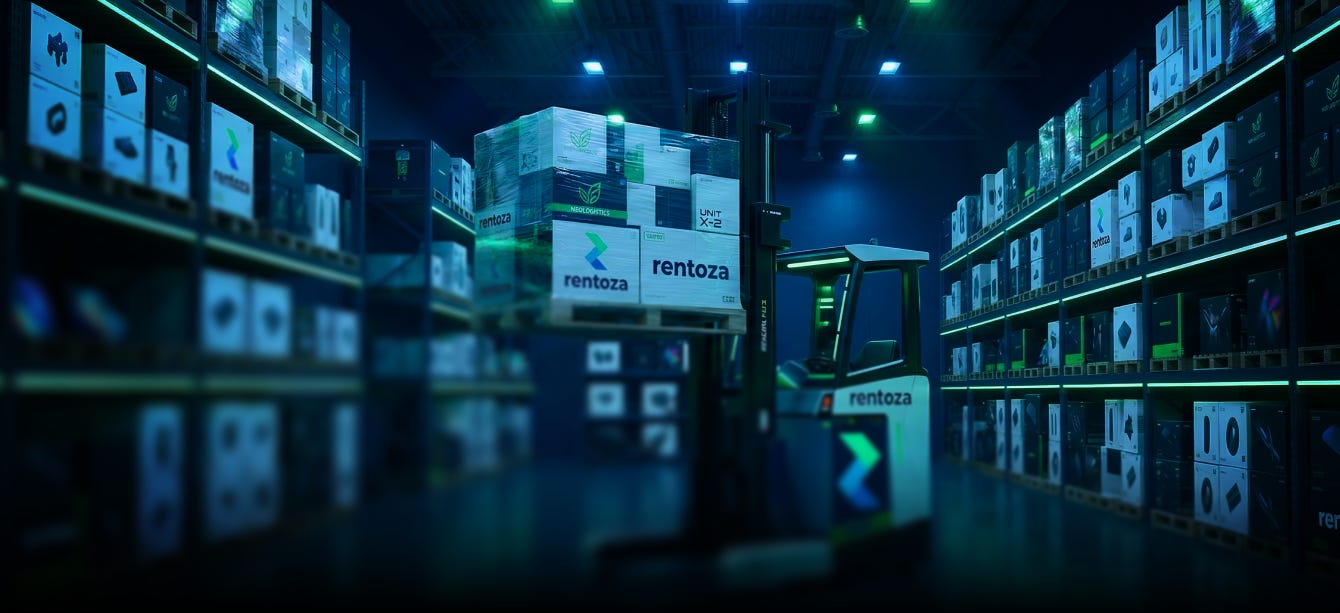
Funding drought claims another victim as Rentoza enters business rescue
Business Insider Africa has reported that South African electronics subscription startup Rentoza has entered voluntary business rescue following severe cash flow strains and a failure to secure vital venture capital.
The asset-heavy B2C/B2B platform, which has processed more than 36,000 device subscriptions, is currently undergoing restructuring to avoid liquidation.
Founded in 2017, Sandton-based Rentoza pioneered South Africa’s digital subscription economy. The platform enables businesses and consumers to rent high-ticket electronics, household appliances, and smartphones on flexible terms. Before entering business rescue in 2026, the startup had raised a total of approximately $7 million in venture capital.
Rentoza’s distress underscores a harsh capital environment for inventory-intensive African startups. This follows similar high-profile collapses of heavily funded tech companies across the continent. Some examples include the logistics startup Sendy, e-commerce player Copia Global, and the B2B retail platform MarketForce. Each of these companies shut down after failing to raise follow-on funding.
The shift among venture capitalists away from inventory-intensive startups is driven by the stark reality that the Silicon Valley “raise-burn-scale” playbook doesn’t work when applied to asset-heavy African operations.
During the 2021–2022 funding boom, access to capital masked a fundamental mismatch. Startups attempting to scale hardware leasing, B2B retail logistics, or e-commerce subscriptions found that expanding required continuous injections of capital to purchase physical inventory long before generating sustained margins.
When global interest rates spiked and foreign capital receded, VCs quickly realized that these “phygital” businesses face massive logistics friction, low retail margins, and macroeconomic shocks like local currency devaluations.
Consequently, investors have sharply pivoted toward “camel models”—highly capitalized, capital-efficient B2B software and fintech companies that prioritize positive cash flow, high margins, and structural endurance over aggressive, subsidized user acquisition.
This is a fundamental and rational shift. In an environment where capital is scarce (but not non-existent), it will naturally move to where it is used most efficiently. Models that are thirsty for capital will not do well in an environment that wants to back camels.
So what sectors are likely to be the next victims of this shift? Here are some candidates. We are sticking broadly to sectors rather than naming specific companies with this analysis.
Who’s next?
Investors are shying away from businesses with high operational overhead, that are overly exposed to consumer disposable income, or are deeply affected by local currency volatility.
We have identified three sectors that face immediate headwinds based on this reasoning.
1. B2C e-commerce and aggregator logistics
Following the high-profile closures of Sendy and Copia Global, pure-play B2C e-commerce and last-mile logistics remain highly vulnerable.
The Vulnerability: Informal address systems and intense urban congestion create a “last-mile logistics penalty” that adds between 40% and 60% to the cost of moving goods across the continent.
The Investor Outlook: Venture capital has dramatically contracted here. In 2024, the entire logistics sector saw minimal funding distribution (with only a few niche players like Renda and Fez Delivery closing small rounds). Investors have realized that tech cannot easily bypass the multi-million-dollar physical warehouse and fleet infrastructure required to scale.
2. High-volume, asset-heavy B2B retail marketplaces
Platforms built on aggregating fast-moving consumer goods (FMCG) for informal retailers—once an investor favorite (e.g., MarketForce)—are under immense pressure.
The Vulnerability: These platforms rely heavily on working capital to buffer credit terms for small merchants and maintain inventory. Operating on microscopic retail margins (frequently under 5%), they are incredibly sensitive to macro disruptions.
The Investor Outlook: With local currencies like the Nigerian Naira and Egyptian Pound experiencing severe devaluations, the USD-denominated returns for international VCs shrink rapidly, making high-turnover, low-margin inventory models a shaky bet.
3. Early-stage consumer buy-now-pay-later (BNPL) & consumer lending
While fintech remains the dominant sector (capturing more than 40% of the continent’s funding), consumer-facing credit platforms face tightening liquidity constraints.
The Vulnerability: Rising global interest rates have driven up the cost of wholesale debt capital that these startups need to fund their loan books. Simultaneously, inflation across major hubs has strained the disposable income of African consumers, driving up non-performing loan (NPL) ratios.
The Investor Outlook: VCs are pushing a “flight to quality.” Capital is moving away from pure consumer credit plays and toward robust B2B fintech infrastructure (e.g., Moniepoint or Wave) that services enterprise transactional flows rather than underwriting individual consumer risk.

Here is our quick daily roundup of the African tech and business stories we think you should be aware of, but probably didn’t have the time to read. [Original sources included.]
Today’s TLDR is presented by CAPACITI
Your Path. Our Purpose.
Empowered Together.
SA AI goes global: Domanski.AI partners with Mack Brands
Cape Town-based Domanski.AI has signed a long-term agreement with global drinks company Mack Brands to build Vanta, a bespoke, in-house AI platform. Operating across 38 countries, Mack Brands will use the system to centralize business data, automate repetitive tasks, and drive faster, evidence-based decision-making.
IT Web
Vodacom, AWS, and UJ launch South African AI talent initiative
Vodacom has partnered with Amazon Web Services (AWS) and the University of Johannesburg (UJ) to bridge South Africa’s AI and data science skills gap. The collaboration gives postgraduate researchers access to advanced AWS cloud tools to develop real-world telecom security and identity management solutions.
Business Tech
Telkom automates mobile contract sign-ups to boost conversion
South African operator Telkom has upgraded its online mobile postpaid platform, enabling customers to complete the entire contract application process digitally without agent intervention. Partnering with Amdocs, the platform integrates facial recognition, real-time verification, and e-signatures to reduce cart abandonment and streamline identity validation.