

Yoco's Latest Acquisition Signals New Direction
The Africa B2B Tech Report, Africa-Middle East B2B tech news & insights for 1 June 2026.

Welcome to issue 40 of the Africa B2B Tech Report Daily. We bring you a daily digest of the news that matters to The Business of African Tech.
The Africa B2B Tech Report is published by BigFive Digital, an African tech media and events firm that produces the annual BigFive Summit in Cape Town. The report is produced and edited by Charles Laughlin, BigFive Digital’s Co-founder &Chief Content Officer. Charles is a globally experienced tech journalist, podcaster, & conference producer.
The Africa B2B Tech Report is a reader-supported publication. To support our work, please consider becoming a paid subscriber.
Thanks for reading The Africa B2B Tech Report! This post is free to the public, so feel free to share it.

Here are some recent stories that matter to The Business of African Tech.
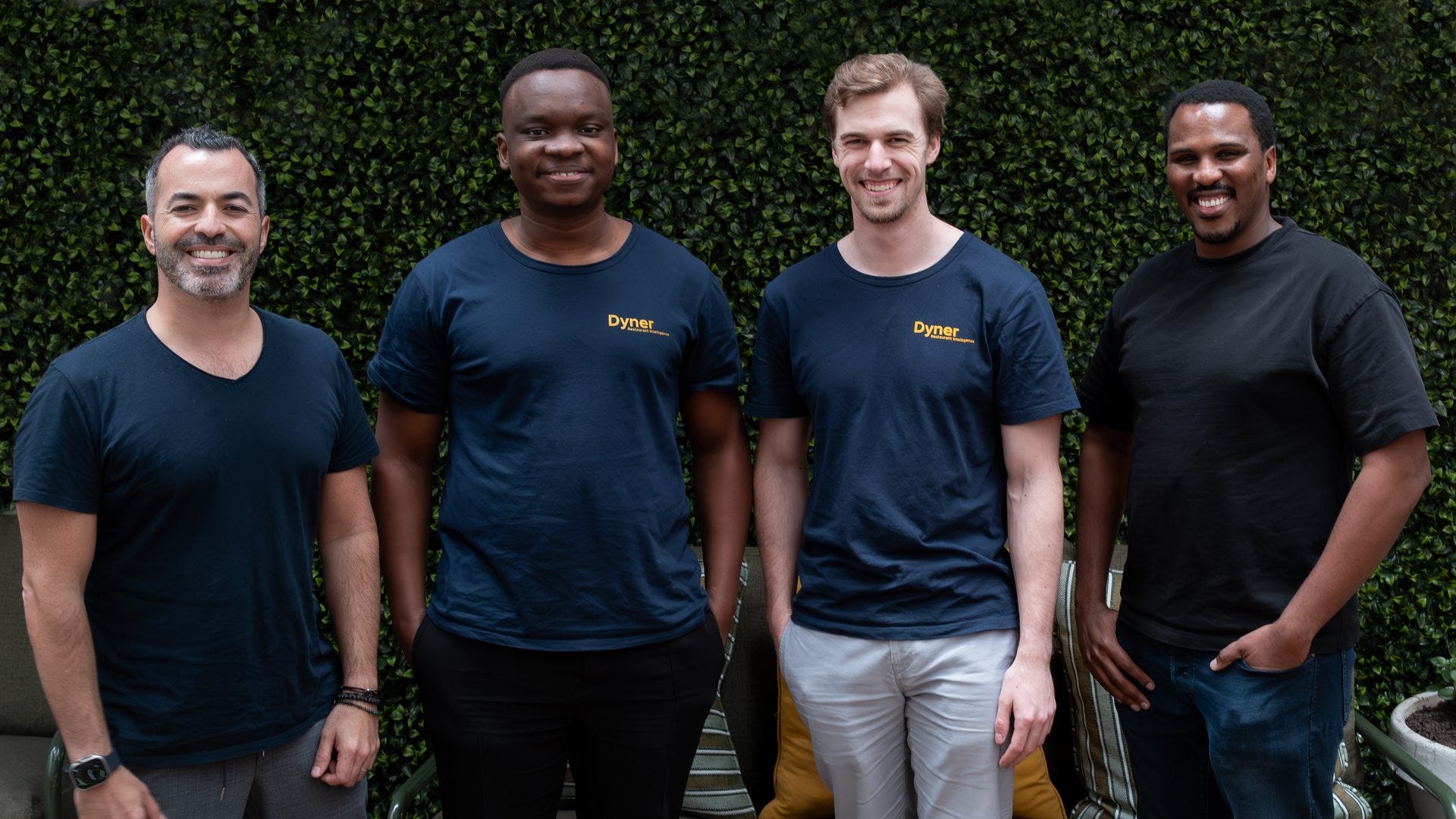
With latest acquisition, Yoco seals shift beyond terminals
South African fintech powerhouse Yoco continues to move beyond payment terminals with its recent acquisition of Dyner.ai, a South African startup building AI-driven operations software for independent restaurants.
This is Yoco’s fourth acquisition, breaking a four-year M&A hiatus and signaling a deliberate evolution in corporate strategy.
Yoco’s previous acquisitions leaned heavily on the acqui-hire playbook to scale its engineering capacity and product development. Yoco’s acquisition of software development agency Cobi Interactive in 2019, e-commerce developer Dado in 2021, and fintech specialist Nona Digital in 2022 all more or less fell under this umbrella.

The Dyner deal, however, marks a pivot from buying talent to buying into an operational vertical. Founded in 2024 by former Discovery actuaries Thalentha Ngobeni and Chris du Plessis, Dyner automates core restaurant operations that small businesses usually manage on spreadsheets—including inventory tracking, supplier ordering, and profit-margin monitoring.
For Yoco, which supports more than 200,000 merchants and has raised more than $100 million from backers like Dragoneer and Partech, the acquisition is a direct response to hardware commoditization.
Incoming CEO Carsten Höltkemeyer, a banking veteran with strong data integration experience, is taking the helm just as Yoco shifts toward building a unified software-as-a-service (SaaS) and payments ecosystem.
Last month, we wrote about Yoco’s transition under its new leadership.
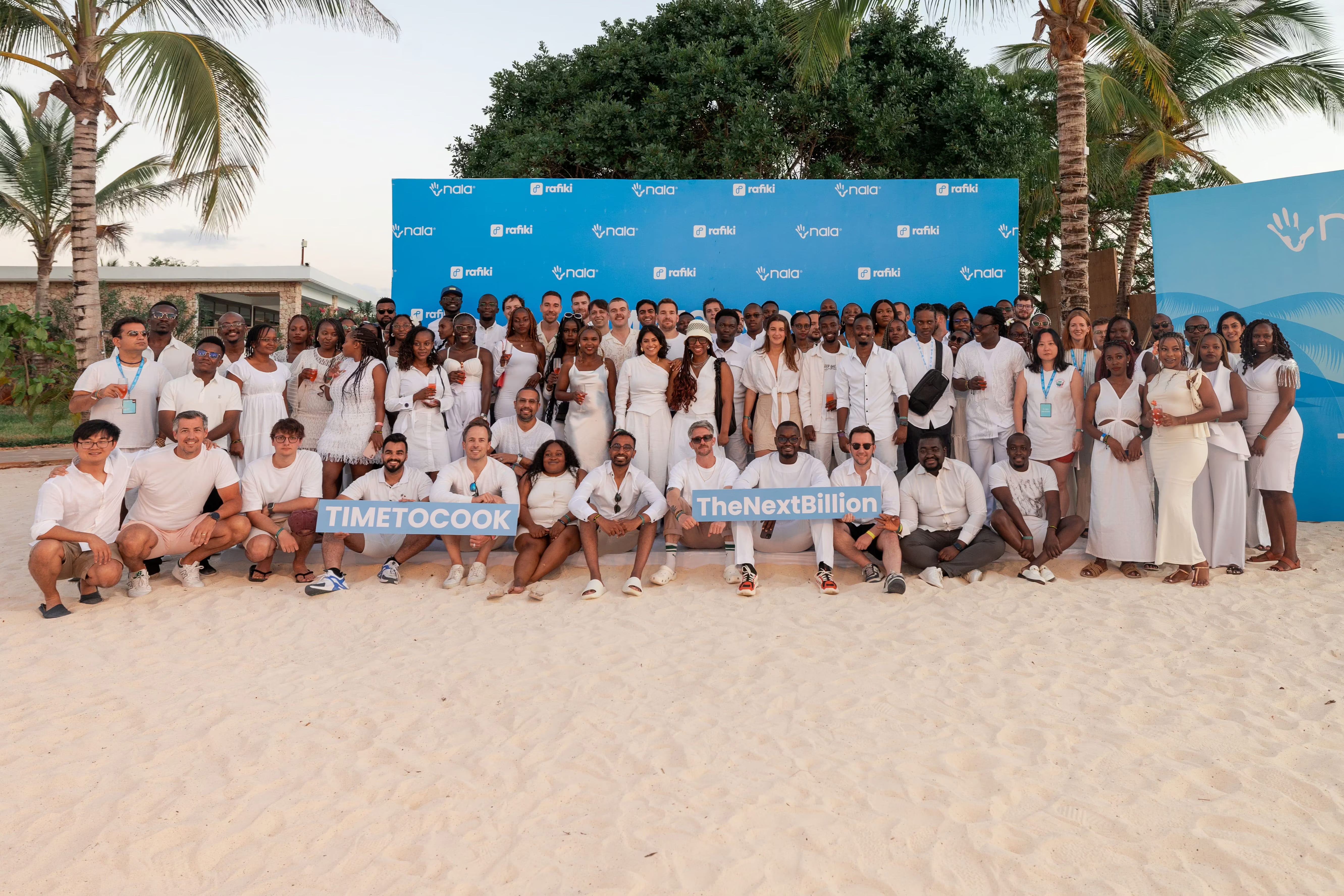
Nala bags $50M to scale stablecoin-driven cross-border payments
Tanzanian fintech Nala has secured up to $50 million in debt financing from Mars Growth Capital to aggressively scale its stablecoin-powered cross-border infrastructure. The initial $25 million tranche will expand liquidity corridors connecting 16 countries across Africa and Asia with Europe and the US.
In Africa, moving money across borders remains a costly operational bottleneck, plagued by high foreign exchange spreads, settlement delays, and fragmented local banking rails. Traditional B2B settlement can eat up to 8-10% of transaction volumes. By leveraging stablecoin banking architecture through its intercompany platform, Rafiki, Nala bypasses traditional correspondent banking loops.
This infrastructure settles transactions near-instantly at a fraction of the cost, shielding businesses from volatile fiat swings. For African B2B tech, Nala’s massive debt facility proves that stablecoins are transitioning from speculative retail assets into the definitive plumbing for affordable pan-African trade.
This stablecoin-driven move from slow and expensive to fast and cheap cross border payments is not only revolutionizing B2B, it is taking the sting out of P2P remittances, which represents a significant percentage of GDP for many African countries.
And this has investors (and us) declaring stablecoins the story to watch in 2026.
Here is what Launch Africa Ventures MP Zach George said about stablecoins on The BIG5D Podcast.
After noting that the accumulated value of remittances across Africa’s 54 countries is potentially in the trillions of dollars, he added.
“And all that money is currently being processed by Western Union, MoneyGram, and a few native apps now. But it’s still inefficient because of two things. The transaction fees are way too high, and the clearing times are far too long.”
With stablecoins, in this context a mechanism for moving one fiat currecy across a border and offloading it as another fiat currency, 10% - 15% fees drop to perhaps 0.5% and clearing times drop from days to minutes.
We’ve seen a wave of related investments, partnerships and product launches across Africa this year. Here are just a few examples.
In January, we reported that Nala partnered with Noah to use stablecoins for instant cross-border settlements.
In May, we reported that Mastercard and Yellow Card joined forces to advance stablecoin-enabled payments across Eastern Europe, the Middle East, and Africa. Also in May, we noted that the African fintech Paga has partnered with blockchain network Sui to introduce crypto payments, stablecoin yields, and asset tokenization.
And it’s not all about remittances with stablecoins in Africa this year. In February, for example, we shared that the African fintech Payd has partnered with Noah to enable stablecoin-powered payments for 30,000+ freelancers, offering instant international settlements via virtual USD/EUR accounts to bypass high banking fees.
And of course, Africa’s big daddy tech unicorn Flutterwave is betting big on stablecoins.
The payments giant is utilizing USDC and USDT stablecoins via the Polygon blockchain to handle cross-border payments and treasury management.
Kenya Floats $772M Sovereign Green Bond for Agri-Tech
Kenya is preparing to issue 100 billion shilling (~$772 million) in sovereign green bonds in a move designed to revolutionize its agricultural sector. Kenya hopes to attract private climate capital to invest in the Kenya Green Bonds Programme, which will finance sustainable irrigation networks, climate-smart farming technology, and renewable energy integration across local food supply chains.
AfDB: Better spending practices could save Africa $299B annually
The African Development Bank’s 2026 Economic Outlook reveals that Africa loses more than 40% of its public investments to inefficiencies. By digitizing fiscal planning, tightening procurement controls, and optimizing project selection, governments can reclaim $299 billion annually—bridging its massive $1.3 trillion financing gap without increasing external debt.
This AfDB Annual Development Effectiveness Review briefing outlines how the bank plans to mobilize and structure Africa’s existing wealth to maximize the impact of every development dollar.
Does Nigeria risk losing its tech wealth to foreign exchanges?
A Nigerian financial analyst is warning that Nigeria faces a massive capital drain if local fintech giants like OPay and Flutterwave pursue overseas IPOs. While these unicorns boost GDP via transactional volumes, exclusive foreign listings strip domestic investors of wealth creation and leave the Nigerian Stock Exchange disconnected from its fastest-growing sector.
ICYMI: The BIG5D Podcast
Our most recent episodes of the BIG5D Podcast have brought you into the room at the 2026 BigFive Summit at Innovation City Cape Town, where the conversations about The Business of African Tech were smart, candid, and insightful.
Here is a rundown, in case you missed any of these great conversations. We have more great episodes coming soon.
E60: Women in Tech Leadership featuring Jill Curr & Laura Thomas

Episode 60 is a must-listen for female founders, of course, but also for anyone who wonders why such a small percentage of African venture funding goes to female founders. This episode is also for anyone who wants to understand how different entrepreneurship feels for women than it does for men.
The episode was recorded at the Summit as a panel discussion on Women in Tech Leadership. It features Jill Curr, one of the founders of MsFit Ventures, a debt fund backing “real economy” female entrepreneurs, and Laura Thomas, founder of edtech startup The Aligned Woman.
Yet some truths about running businesses are truly universal. As Laura says during the episode, the best test of whether you are a natural entrepreneur is “how insane you are”.
E59: Solving ‘Bleeding Neck’ Problems featuring Zachariah George

In Episode 59 (originally a Fireside Chat at the Summit), we go deep on the state of Africa’s tech ecosystem with Zachariah George, the managing partner at Launch Africa Ventures, a prominent Cape Town early-stage VC.
Zach is his usual candid, insightful, and profane self in this conversation. No bleeps. Just 100% pure Zach on the rise of stablecoins, using AI to solve African problems, the endurance of fintech, and why robust intra-continental M&A is the best indicator of a healthy African tech ecosystem.
“What’s really interesting is the percentage of M&A happening in Africa has really shot up,” Zach says. “You don’t have to constantly rely on U.S. or European funds to create liquidity. You can create internal liquidity within the continent.”
E58: Scaling Without Borders featuring Rahul Jain
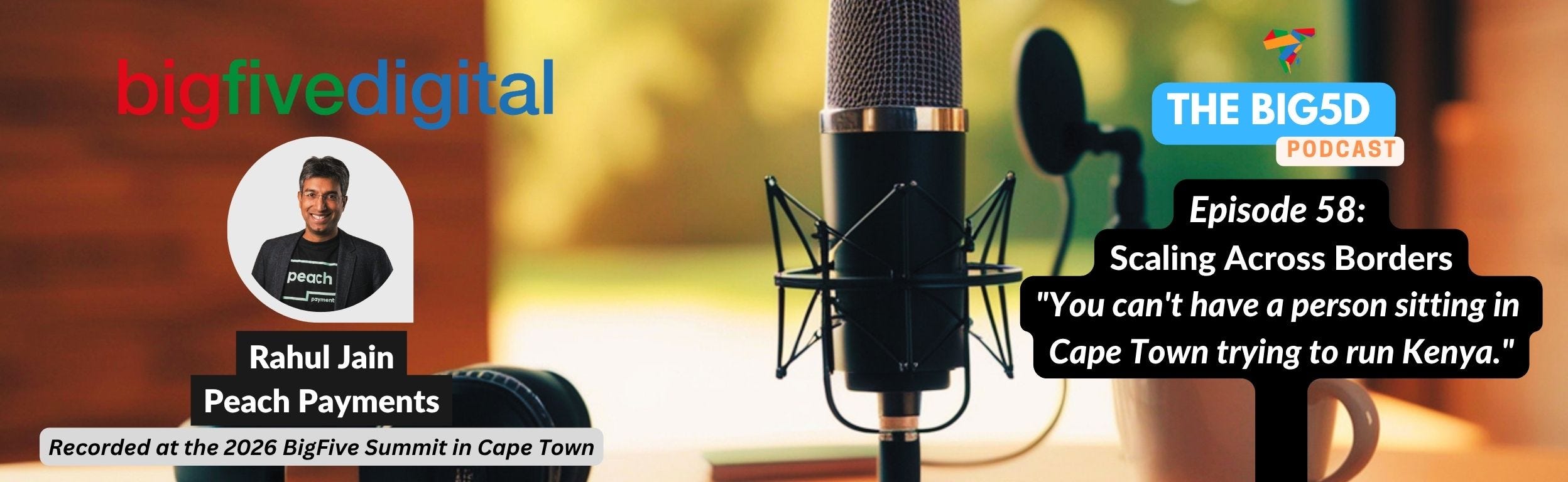
In Episode 58 (also originally a Fireside Chat at the Summit), Peach Payments CEO Rahul Jain offers a masterclass on scaling a fintech startup across Africa. Peach is a South African payment gateway that operates in 15 markets, primarily in Africa.
In this conversation, Jain offers clear and strongly held views on intra-African expansion, raising capital, building vs. acquiring, BNPL, and much more.
While an advocate of international expansion, Jain was clear that the process is not for the faint of heart.
“We have to be locally present in every market and secure a license from a central bank,” Rahul explains. “It’s like having a wisdom tooth extracted without any anesthetic.”